Community Meeting #3: Housing Design (February)
Updated: Jul 22
On February 19, 2026, the Bicentennial Bluffs Choice Neighborhood Planning team hosted Community Meeting #3 at the Community Room of Heritage Place Apartments. Approximately 50 participants attended, and most of them were residents of the target housing site, with some community members who live or work in the Bicentennial Bluffs Planning Area.
The goals of this meeting focused on:
Housing Design Visual Preference: Gather input for the elements related to design preferences for housing, open space, and amenities through a voting activity.
Housing Design Workshop: Engaging meeting participants in a hands-on exercise about the future housing design for the target housing sites.
Early Action Project: Reviewing the proposed improvements to the Western Avenue sites for residents to provide feedback on.
The meeting format included open engagement activities through stations that displayed materials and prompts for resident input; it also included breakouts for small-group conversations and collaborative activities.

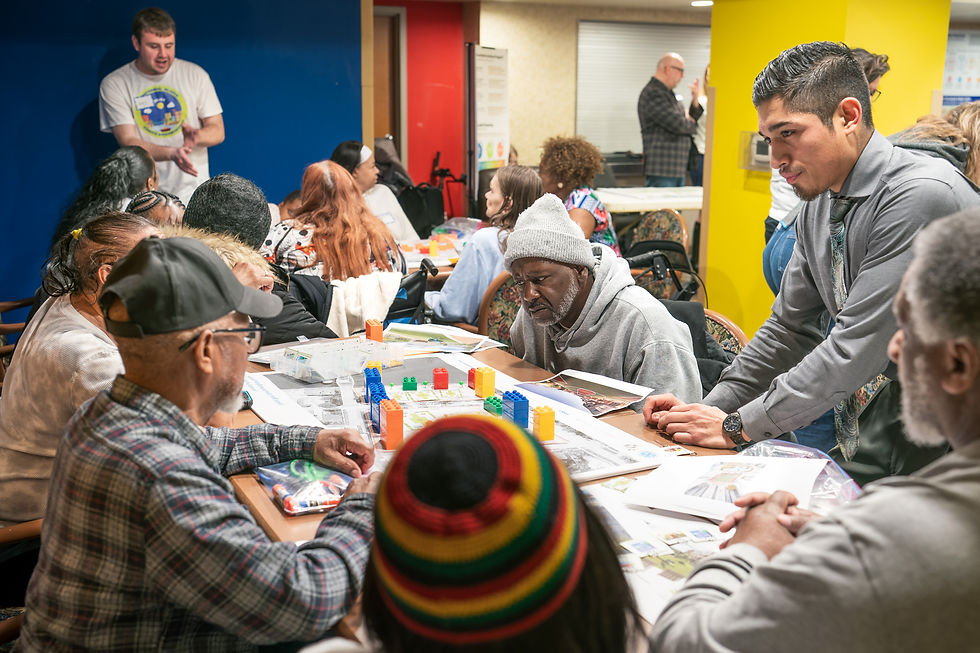
Housing Design Visual Preference: Meeting participants voted on what they would like to see on Heritage Place in the categories of housing, open spaces, and amenities. Each meeting participant voted for their top three choices, choosing from multiple images in each category.
Housing Design Workshop: Residents engaged in a design exercise to reimagine Heritage Place Apartments. The community explored various possibilities for organizing open space, connections, amenities and buildings, including types of housing, with interactive blocks, and programming cards and pins.
Early Action Project: Based on community input, municipal coordination, and planning considerations, the Western Avenue Greenway was identified as the priority site and residents were invited to provide targeted feedback on the initial concept. This two-block, city-owned corridor between Broadway Avenue and Pine Street serves as a gateway to Bicentennial Bluffs and presents a strong opportunity to transform an underutilized space into an accessible, welcoming, and community-centered greenway.


Some of the main insights from the meeting around the Housing Design included:
Open Space
A large, connected network of plazas and courtyards centered near Bluff Street.
A multi-use “mega courtyard” with gardens, playgrounds, seating, and space for community events.
A continuous riverwalk with walking and biking paths, shade trees, and lighting.
Active recreation features such as basketball courts and dog areas.
Pavilions, picnic areas, grills, and flexible gathering spaces for families and neighbors.
Safer pedestrian connections between blocks and along the riverfront.
Residents emphasized that the riverfront should remain open and accessible, with housing oriented around shared green spaces rather than directly along the river’s edge.
The overall direction reflects a clear community priority: create a welcoming, safe, and vibrant public realm that brings neighbors together and strengthens connections to the Des Plaines River.

Housing
A mix of housing types across the site, including townhomes, duplexes, triplexes, multiplexes, and apartment buildings.
Strong preference for lower-density townhomes — particularly two-story and some one-story homes to support seniors and residents with mobility needs.
Homes organized around shared green spaces and central courtyards.
A density gradient across the site, with lower-density housing closer to existing neighborhoods and higher-density buildings nearer Bridge Street and Broadway.
Townhomes and triplexes facing courtyards and the riverwalk, with larger apartment buildings positioned at key corners.
Consolidated parking strategies, including attached/on-site parking for townhomes and larger centralized lots for apartment buildings.

Amenities
Well-lit, walkable pathways throughout the site, including a strong pedestrian promenade and riverfront path.
Enhanced lighting, security cameras, and highly visible crosswalks to improve safety.
Abundant seating, picnic tables, planters, and maintained landscaping across courtyards and along the riverwalk.
An active riverfront with pavilions, grills, and flexible gathering space for community events.
A central community amenity space, such as a clubhouse, lounge, fitness room, or recreation center.
Neighborhood-serving retail, including a small grocery or convenience store near Bluff Street and Division Street.
Thoughtful parking strategies, including consolidated lots for larger buildings and convenient parking near townhomes.
Public art and murals that reflect Joliet’s history and culture, while noting concerns about long-term maintenance and vandalism.

Community Meeting #3 was a great success, bringing residents together to help shape a shared vision of housing design and the Early Action Project. Attendees actively participated in the activities, offering valuable insights and feedback.
Community Meeting #4 will be held in June of 2026 and will focus on Strategies + Projects.