Working Groups #3 (July): Project Priorities

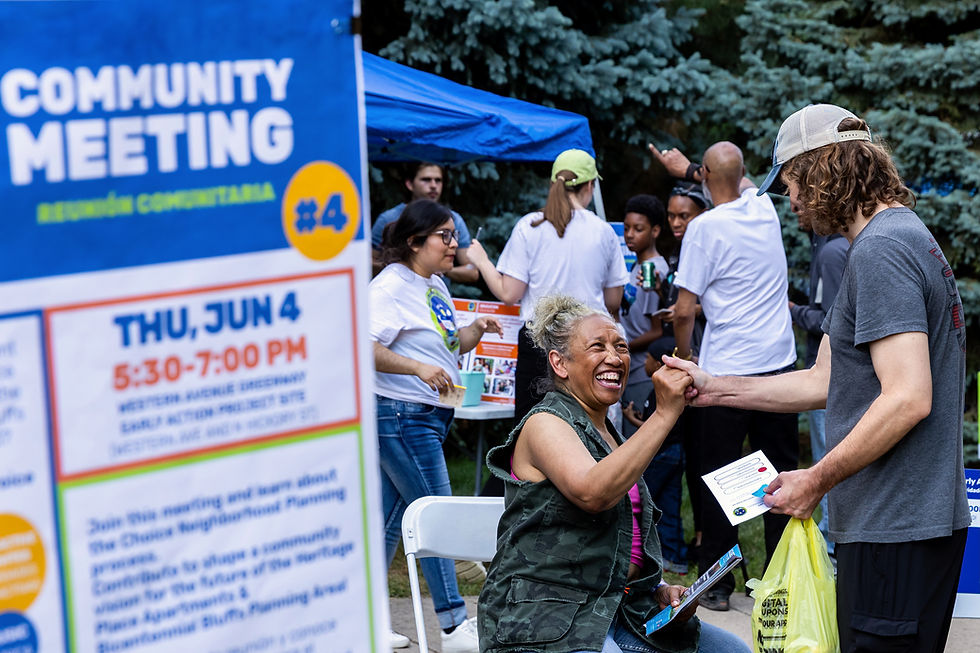
On July 29, we held our third round of Working Groups, bringing residents, stakeholders, and community partners together for three engaging sessions focused on the People, Housing, and Neighborhood elements of the plan. Activities took place across the community—from discussions at the Joliet Public Library, to a resident site visit at Stevenson Crossing, to a neighborhood walk along Hickory Street. Throughout the day, participants shared ideas, refined priorities, and helped identify potential partners and resources that can support the implementation of projects and strategies across all three elements of the Transformation Plan.
Housing Working Group
Residents Site Visit to Stevenson Crossing
On July 29, Heritage Place residents came together for a special Housing Working Group focused entirely on imagining the amenities they would like to see as part of the future redevelopment of Heritage Place. With support from the City of Joliet and the Housing Authority of Joliet (HAJ), residents boarded City and HAJ vans for a field trip to Stevenson Crossing.
During the visit, HAJ CEO Michael Simelton guided residents through the development and its three amenity wings focused on mental health, social connection, and wellness. Residents explored community rooms, a resident-operated grocery shop, health clinic, fitness and entertainment spaces, and indoor and outdoor gathering areas.
The site visit was followed by a hands-on workshop where residents worked in groups to identify and prioritize amenities for Heritage Place. Their top priorities were a health clinic, fitness center, entertainment center, café, and financial institution. Each group shared its selections and discussed how these spaces could support health, wellness, connection, and everyday quality of life. The session gave residents a chance to experience different amenities firsthand and turn that experience into ideas for the future of their community.
Neighborhood Walk
Exploring Hickory Street’s History and Identity
With support from the City of Joliet, residents, City officials, the planning team, and Community Ambassadors gathered at the Western Avenue Greenway for a neighborhood walk focused on the proposed Hickory Street Cultural Connector. Along the route, participants shared stories, historic facts, and important details about Hickory Street that they would like residents and visitors to know, while also identifying potential locations for streetscape improvements, historic markers, wayfinding, and other elements that could give the corridor a distinctive identity rooted in the neighborhood’s rich heritage.
At several stops, the group discussed important events from the neighborhood’s past, existing conditions, and how the Cultural Connector could strengthen connections and celebrate local history. The walk also provided an opportunity to pilot elements of the proposed Neighborhood Walk and Cultural Ambassadors programs, exploring how residents can help share and preserve the stories of their community.
The walk concluded at Ruby and Hickory Streets, wrapping up a fantastic summer afternoon of conversation, learning, and community connection. Feedback gathered during the walk will continue to inform the refinement of the project and help identify potential partners for future implementation.
People Working Group
Building Partnerships for Implementation
Residents, stakeholders, and community partners gathered at the Joliet Public Library for a People Working Group focused on turning community priorities into actionable partnerships. Participants included representatives from PACE Bus, the City of Joliet, the Will County Workforce Board, and other local organizations working across the community.
The conversation centered on three key areas of the People Element: Education, Health & Wellness, and Income & Employment. Participants discussed existing programs, community needs, and opportunities to better connect residents with available resources and services. Attendees were also asked to identify potential implementation partners that could help advance the strategies developed through the Choice Neighborhood planning process.